Ecommerce Development for New and Growing Stores
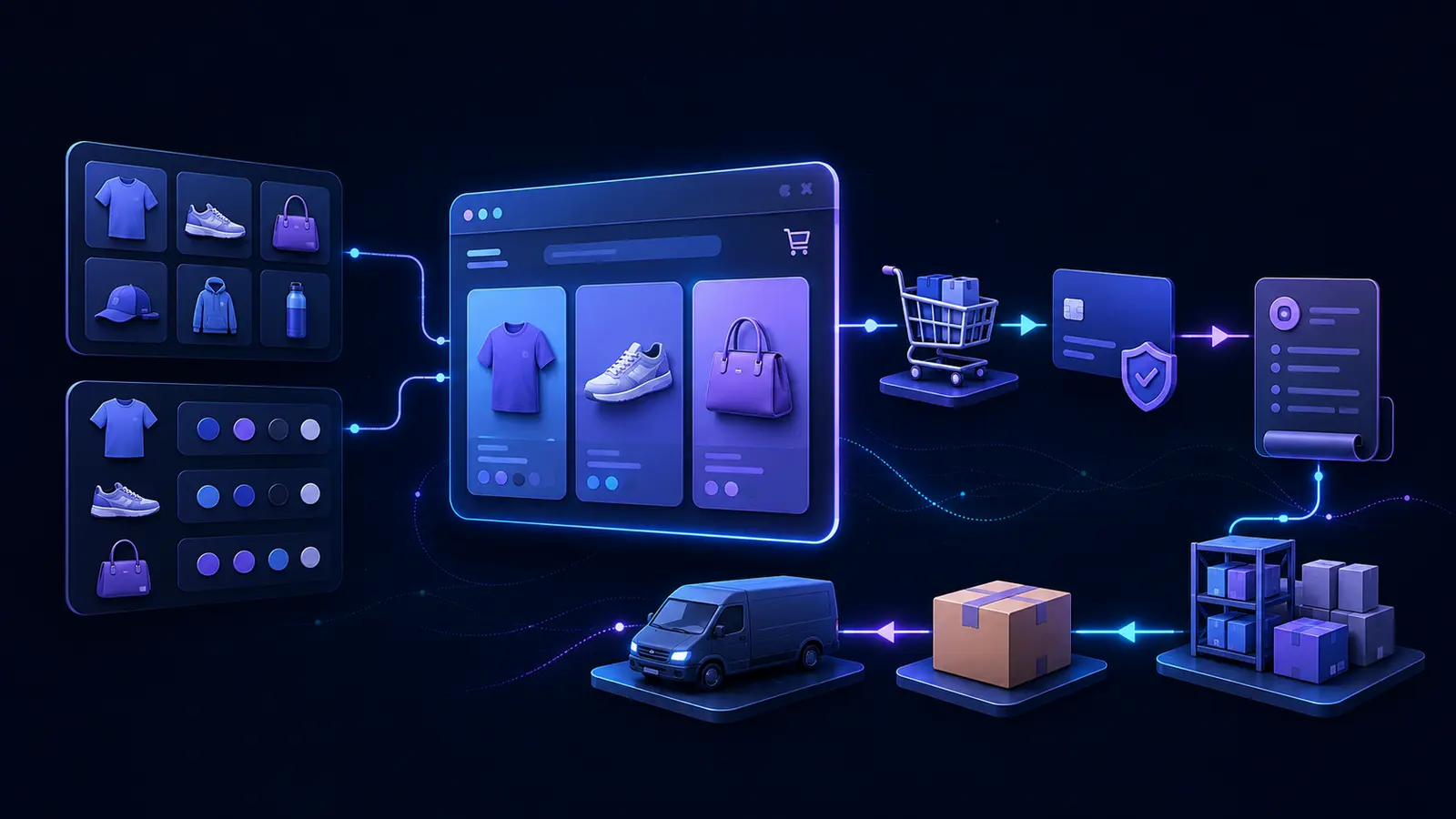
An online store has more moving parts than a standard marketing site. Products, variants, inventory, payments, shipping, tax, apps, analytics, and customer accounts all meet at the storefront. A change that looks small from the outside can affect several of those systems at once.
We build new stores and improve existing ones on Shopify, WooCommerce, and headless commerce stacks. We do not start by pushing a platform. We start with the way the business sells, manages products, fulfills orders, and plans to grow, then recommend the setup that fits that operation.
What this work solves
A store can process orders and still create unnecessary work for the customer or the team running it. Ecommerce development can address problems such as:
- Product and category navigation that makes a large catalog difficult to browse
- A theme or app stack that has become slow, fragile, or expensive to maintain
- Product pages that leave important buying questions unanswered
- Checkout steps, account requirements, or mobile layouts that create avoidable friction
- Inventory, shipping, tax, subscription, or fulfillment systems that do not exchange data cleanly
- Product variants and filtered URLs that create duplicate or confusing pages for search engines
- A migration plan that overlooks redirects, metadata, customer data, or order history
- Product information that differs between the storefront, structured data, merchant feeds, and sales channels
The platform should fit the operation
The right platform depends on more than the number of products. We look at who will manage the catalog, how orders are fulfilled, which systems need to connect, how much control the storefront needs, and what the business can realistically maintain after launch.
Shopify and Shopify Plus
Shopify is often a practical fit when the business wants managed hosting, a dependable checkout, and a broad app ecosystem without maintaining the commerce server itself. Work can include a new storefront, custom theme sections, app integrations, catalog setup, subscriptions, international selling, B2B requirements, and migration from another platform. Shopify Plus is considered when its checkout, automation, or B2B features match a real operational need.
WooCommerce
WooCommerce can make sense when content and commerce need to live closely together in WordPress, or when the business needs more control over the store's code and data. Work can include custom themes, block-based storefronts, extension cleanup, checkout and payment integrations, performance work, and headless storefronts using the WooCommerce Store API. The tradeoff is that hosting, updates, security, and extension compatibility need active management.
Headless and composable commerce
Headless separates the customer-facing storefront from the commerce backend. It is useful when a standard theme has become a real constraint, several channels need to use the same product data, or the experience requires custom behavior that would be difficult to maintain inside a theme. Depending on the project, the stack may use Shopify Hydrogen and Oxygen, BigCommerce Catalyst, WooCommerce APIs, commercetools, Medusa, Saleor, or a custom React storefront. Headless adds flexibility, but it also adds engineering and maintenance work. We recommend it only when that tradeoff is justified.
Other platforms and existing systems
Some businesses already have an Adobe Commerce, Magento, BigCommerce, ERP, POS, or marketplace setup that should remain in place. In those cases, the job may be to improve the storefront, repair integrations, or plan a phased migration rather than replace the entire commerce system. The recommendation follows the operation, not a preferred vendor list.
How we approach the work
We begin with the store behind the screens: the catalog, the people managing it, the order flow, the fulfillment process, and the systems that need to exchange information. Once those requirements are clear, we can decide what belongs in the platform, what requires an integration, and what the customer should see at each step. Scope, responsibilities, and pricing are agreed in writing before development starts.
- Review the catalog, product types, variants, customer groups, markets, and order workflow
- Compare platform options and explain the cost, control, and maintenance tradeoffs
- Plan category, search, filter, product, cart, account, and checkout experiences before visual polish
- Define integrations for payments, shipping, tax, inventory, fulfillment, CRM, ERP, POS, subscriptions, reviews, and email where relevant
- Build and review the storefront on a private preview before launch work begins
- Prepare a migration and redirect plan when URLs, product data, customer records, or order history are moving
- Test the agreed customer journeys on mobile and desktop without treating a successful homepage render as complete QA
What a scope can include
Every store has a different catalog and operating model, so the items below describe what a project can include rather than a fixed package. The final scope identifies the exact platform, integrations, data responsibilities, and launch requirements.
- Platform selection and technical planning for Shopify, WooCommerce, or a headless stack
- Storefront UX and visual design adapted to the brand, catalog, and buying process
- Custom theme sections, product templates, collection pages, navigation, search, and filters
- Responsive, accessible front-end development with clear keyboard and form behavior
- Cart, checkout, customer account, subscription, B2B, and wholesale requirements
- Payment, shipping, tax, inventory, fulfillment, CRM, ERP, POS, review, and email integrations
- Product, category, customer, and order-data migration with an agreed validation process
- Redirect mapping and metadata preservation for stores moving from another platform
- Performance work covering image handling, scripts, app weight, and layout stability
- Ecommerce SEO foundations: crawl paths, canonicals, product variants, internal linking, and structured product data
- Analytics and commerce-event tracking for the customer actions included in the agreed measurement plan
- Documentation for store administration, ongoing maintenance, and responsibilities after launch
The storefront is only one part of being found
Search engines and shopping systems need the same product facts customers do: what the item is, which variants exist, whether it is available, what it costs, and what the shipping and return terms mean. Those details should agree across the visible product page, structured data, merchant feeds, and connected sales channels. We plan category and product templates with that consistency in mind. These steps can improve eligibility and reduce ambiguity. They do not guarantee rankings, shopping placement, or inclusion in an AI-generated answer.
- Category and product architecture based on how customers search and compare
- Crawl and canonical rules for filters, sorting, pagination, and product variants
- Product, Offer, and ProductGroup structured data that matches the visible page
- Merchant feed fields checked against price, availability, shipping, and return information
- Server-rendered product content and performance work on the templates used most often
- Buying guides, comparisons, specifications, and FAQs written for real purchase questions
- Clear brand, policy, and business information that search and AI systems can identify
The store, SEO, and AI Search Visibility work share the same product data
An ecommerce build affects more than design. Category structure shapes organic search. Product templates determine what structured data can say. App choices affect speed. Merchant feeds depend on the same price and availability information the storefront shows. Planning those decisions together reduces the chance that one team fixes a problem another part of the build created. Website Design & Development covers the broader page and brand experience. SEO covers crawlability, search intent, architecture, and content. AI Search Visibility focuses on clear, accessible facts and answer-ready material. Ecommerce Development brings those disciplines into the catalog, storefront, checkout, and connected systems.
Who this fits
A good fit
- You are preparing to launch a store and need help choosing the platform and planning the build
- Your current Shopify or WooCommerce store is slow, difficult to manage, or held together by too many apps or extensions
- You need to migrate products, customers, orders, or URLs without treating SEO as an afterthought
- Your catalog, B2B model, subscriptions, markets, or integrations have outgrown a standard theme
- You want the storefront, ecommerce SEO, product data, and AI Search Visibility work coordinated
- You need a headless storefront and understand that it comes with additional development and maintenance responsibilities
Not what we do
- You need a guaranteed revenue figure, conversion rate, ranking, or launch outcome
- You want marketplace account management, paid advertising, or ongoing social media management as the main service
- The project requires a large around-the-clock engineering and support team
- You need legal, accounting, tax, payment-compliance, or data-privacy advice rather than technical implementation
- You want to choose a complex platform before reviewing whether the business needs it
Honest limits
A better store can reduce friction, make the catalog easier to manage, improve technical search foundations, and give customers clearer information. It cannot create product demand, fix margins, maintain inventory, or guarantee sales. Platform fees, apps, payment providers, shipping services, tax tools, and third-party APIs also set limits we do not control. We explain those dependencies during scoping and separate what we can build from what another provider must supply.
Ecommerce Development questions
Related services
These share a lot of groundwork with this one. The services overview compares all four side by side.
Website Design & Development
Website design and development for U.S. service businesses, built with accessible, server-rendered, search-readable markup.
Read moreShopify SEO
Shopify SEO services for U.S. stores: collection and product architecture, variant and filter crawl rules, theme speed, structured data, and reporting.
Read moreSearch Engine Optimization
Technical, on-page, and local SEO for U.S. service businesses: crawlability, site architecture, search intent, and plain-language reporting.
Read moreAI Search Visibility
AI Search Visibility for U.S. service businesses: schema, consistent business facts, accessible HTML, and answer-ready content for AI search tools.
Read moreWant us to review the store or the plan?
Send the current store URL, or tell us what you are preparing to build. Include the platform if you already have one and the main operational issue you want to solve. We will reply by email with what we would look at first.